

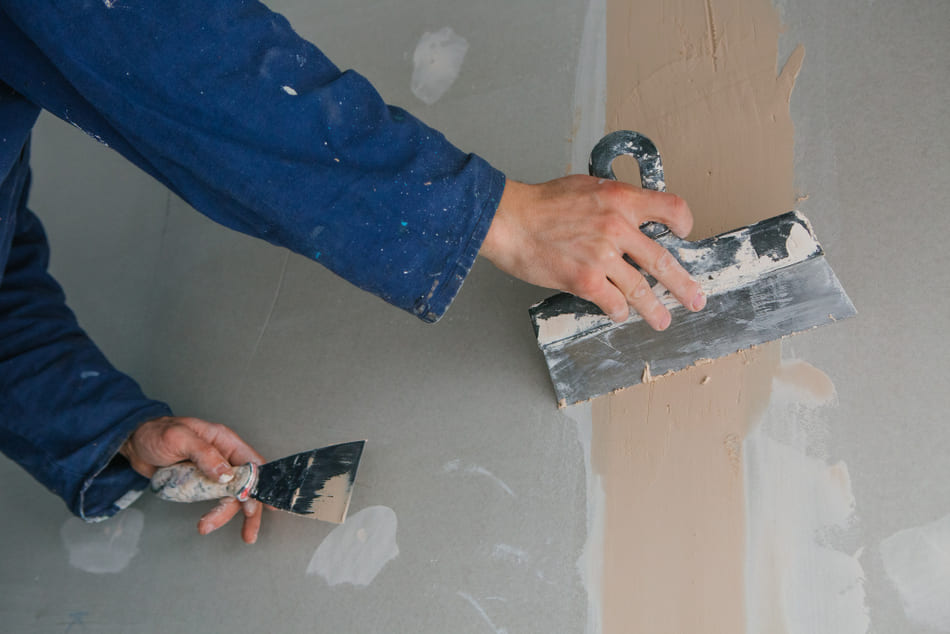
When homeowners search for drywall repair near me, they are usually not looking for a cosmetic touch-up alone. Most of the time, they are trying to solve a problem that is affecting how a room looks, feels, or functions. A wall stain after a roof leak, a crack that keeps coming back, bubbling paint in a bathroom, or a hole that seems too big for a quick patch can all be signs that the issue goes deeper than the visible surface. That is why drywall problems should never be judged only by appearance. What looks like a minor imperfection can actually point to moisture intrusion, structural movement, poor previous repairs, or damage inside the wall cavity.
That practical, problem-solving angle fits how New England Home Repairs presents its services. On its website, the company positions itself as a Greater Boston-area team focused on painting, renovation, home repairs, and drywall finishing, while also highlighting repairs caused by water leakage, moisture, or cracks. The company says it has over 20 years of experience and offers drywall repair as part of a broader one-call solution for homeowners who want reliable help without unnecessary surprises during the process. That matters because drywall rarely fails in isolation. In real homes, drywall damage is often connected to painting needs, carpentry issues, bathroom wear, or moisture-related deterioration that affects other finishes around it.
Professional help becomes especially important when water is involved. The EPA says the key to mold control is moisture control and recommends drying water-damaged areas within 24 to 48 hours to reduce the chance of mold growth. The agency also advises calling in a professional when damage involves sewage or contaminated water. In other words, drywall damage is not always just a wall problem. It can be a moisture problem, a health concern, or a sign that another system in the home needs attention first. That is why a homeowner searching for drywall repair near me should know the difference between a quick DIY patch and a repair that really calls for an experienced team.
Drywall Repair Near Me: The Warning Signs You Should Not Ignore
One of the biggest mistakes homeowners make is waiting too long. They see a hairline crack, a soft area near a window, or a stain above the ceiling and assume it can wait until “later.” But drywall damage tends to grow more obvious and more expensive when the underlying cause is ignored. According to This Old House, small drywall holes and basic patching can sometimes be manageable for a capable DIY homeowner, especially when the damage is isolated and the surrounding wall is dry and stable. The problem is that many homeowners are not dealing with a truly isolated issue. They are dealing with repeated cracking, soft material, peeling paint, or a repair area that will never blend correctly without proper finishing skill.
Water stains are one of the clearest warning signs. A brownish ring, a discolored patch, or bubbling around joints often indicates that moisture has already traveled through the drywall surface. The EPA notes that signs of water damage should be investigated quickly, including peeling paint and cracked drywall tape, especially in leak-prone areas like bathrooms. If your drywall feels soft, swells outward, crumbles when touched, or shows tape separation along seams, a cosmetic patch is usually not enough. Water-damaged drywall may need partial removal, cavity drying, and replacement rather than simple resurfacing. EPA guidance also explains that drywall may sometimes be dried in place only if there is no obvious swelling and the seams remain intact; otherwise, removal and replacement may be necessary.
Cracks also deserve more attention than many people give them. Bob Vila notes that some drywall cracks are cosmetic, especially very fine hairline cracks, but wider or recurring cracks may indicate settling, framing movement, or a larger structural issue. Large cracks or a bowed ceiling are stronger signs that professional evaluation is needed. A small crack above a door may be one thing; a crack that reopens after multiple repairs, runs diagonally from a corner, or appears alongside sticking doors and sloping lines is another. In those cases, hiring a professional is less about making the wall look smooth and more about understanding why it failed in the first place.
Another common sign is failed texture or bad prior repairs. Homeowners often attempt a patch, only to discover that sanding lines, flashing paint, uneven feathering, or a visibly raised repair area make the wall look worse than before. This Old House’s patching guides make clear that drywall repair quality depends not only on filling the damaged spot, but also on proper backing, compound application, drying time, sanding, and blending into the surrounding surface. That is exactly where professional drywall repair becomes valuable. A good repair should disappear into the wall, not advertise itself every time light hits the surface.
Here are the most common signs that it is time to stop searching casually for drywall repair near me and actually schedule professional service:
- Water stains, bubbling, or soft drywall after a leak.
- Cracks that keep returning after patching.
- Holes larger than a simple nail or anchor repair.
- Sagging or bowed ceiling drywall.
- Visible mold risk or dampness around the damaged area.
- Peeling tape, separated seams, or swelling joints.
- Previous repairs that remain obvious after painting.
- Damage that affects multiple rooms or connects to other repair needs.
These signs are important because drywall is both a finish surface and a signal. When it starts to deform, separate, or discolor, it is often telling you something about the condition of the home behind the paint.
When Professional Drywall Repair Is the Smarter Choice for Long-Term Results
The reason many homeowners end up needing a pro is not because drywall is impossible to patch. It is because durable, clean-looking drywall repair is harder than it appears once the damage becomes more than superficial. A tiny nail hole is one thing. A damaged ceiling after a plumbing issue, a bathroom wall with chronic moisture exposure, or a living room crack that keeps reopening is something else entirely. That is where hiring a professional can actually save money, not increase cost.
A company like New England Home Repairs appears to be built for that type of practical homeowner need. Its site emphasizes not only drywall repair services, but also related offerings such as interior painting, carpentry repair, bathroom remodeling, home repair services, and work tied to moisture, cracked surfaces, and wear over time. It also presents itself as a “one-call solution” for projects that may involve more than one visible issue. That positioning matters because drywall problems often live inside a bigger chain reaction. A bathroom wall may need drywall replacement, repainting, trim repair, and moisture-source correction. A leak-damaged ceiling may need drywall work plus inspection of the source, stain-blocking primer, repainting, and finish matching. If one team can manage the visible repair in the context of the surrounding finishes, the result is usually cleaner and more efficient.
Professional drywall repair is also the smarter choice when appearance matters. Walls and ceilings reflect light in unforgiving ways. Even small mistakes in sanding, feathering, or texture matching can remain visible after painting. This Old House explains that patching methods vary by hole size and that larger damage often requires a more involved process, including backing support, cut-out replacement, compound layering, and finishing. Bob Vila similarly notes that larger holes, gaps, and water-damaged drywall often go beyond light patching and are better left to professionals.
There is also the issue of timing. If moisture is involved, delaying a proper repair can open the door to mold growth. The EPA’s guidance is direct: wet materials should be dried quickly, ideally within 24 to 48 hours, and moisture problems should be corrected promptly. So the real question is not simply, “Can I patch this?” It is, “Should I risk a short-term fix on a problem that could grow behind the wall?” For homeowners dealing with repeated cracks, visible stains, seam failure, or softness in the drywall, the answer is usually no.
If you are evaluating your next step, the best approach is straightforward. First, determine whether the drywall is dry, stable, and truly limited to surface damage. Second, look for the warning signs that point to hidden causes, especially leaks, swelling, seam failure, or repeated cracking. Third, choose a contractor whose service mix fits real residential problem-solving, not just patch-and-go work. For homeowners in the Greater Boston area, New England Home Repairs clearly markets itself around that broader repair-and-finish model, which is why the company’s drywall service makes sense in the context of its painting, carpentry, renovation, and maintenance offerings.
In the end, searching for drywall repair near me is really about finding the right level of help. If the issue is minor, dry, and truly cosmetic, a small repair may be simple. But if your wall or ceiling is telling you a bigger story through stains, cracks, softness, or recurring damage, professional help is usually the safer and smarter move. A proper repair does more than cover damage. It restores the surface, protects the room, and helps make sure the same problem does not come right back.