

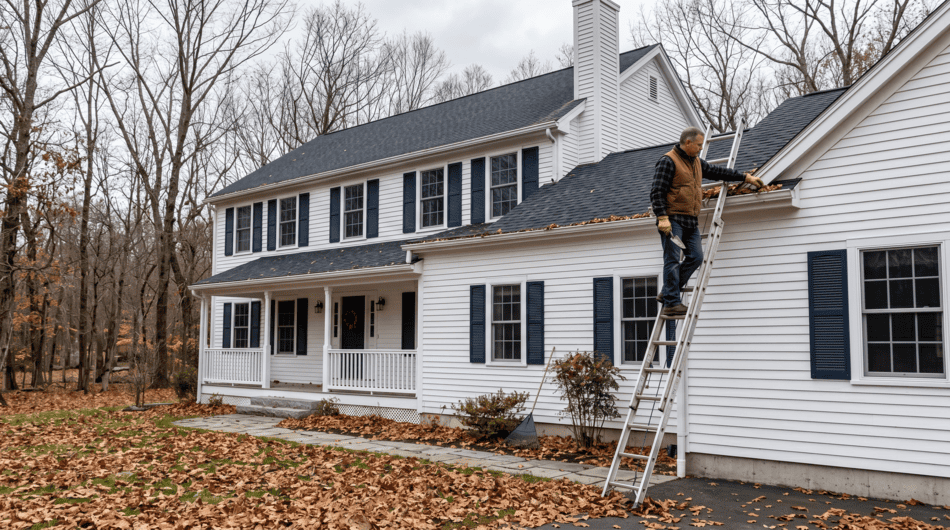
Winter in New England plays by its own rules. Heavy snow, ice, sustained freezing temperatures, and relentless wind put homes under a level of stress that few other climates can match. Having a solid home maintenance checklist for New England winter is not optional — it is what separates homeowners who sail through the season from those who find themselves dealing with water damage, failed systems, and expensive emergency calls in the middle of January. The time to act is fall, before the first frost locks in, and the steps are more manageable than most people expect.
Inspect Your Exterior Before the Cold Season Locks In
The outside of your home bears the brunt of everything a New England winter throws at it, which makes the exterior the right place to start your seasonal checklist. Walk the full perimeter of your property and look carefully at the siding for cracks, gaps, or areas where the material has pulled away from the wall. Any opening in your home’s envelope is an invitation for moisture and cold air to work their way inside, and what looks minor in October can become a serious problem by February.
Pay close attention to the areas around windows and door frames. Caulking that has shrunk, cracked, or separated is one of the most common sources of drafts and heat loss. Resealing these areas before temperatures drop is a low-cost task that delivers real comfort and energy savings throughout the winter. While you are outside, take a look at your deck as well. If the wood has not been properly sealed or stained within the last three to four years, winter moisture will accelerate deterioration fast. A protective coat applied in the fall extends the life of the structure considerably and prevents the kind of damage that leads to full replacement.
Your Roof and Gutters Are Your Home’s First Line of Defense
No part of a home maintenance checklist for New England winter is more critical than the roof and gutter system. These two elements work together to move water safely away from your home, and when either one fails, the consequences ripple through the entire structure.
On the roof, look for shingles that are cracked, curling, or missing. Check the flashing around chimneys, skylights, and vents — these transition points are where leaks most commonly develop. Soft spots or sagging areas anywhere on the roof surface signal underlying damage that needs attention before snow adds weight and pressure to the problem. Ice dams, which form when heat escapes through the roof and melts snow that refreezes at the colder edges, are one of the most destructive and preventable winter issues for Massachusetts homeowners. A roof in solid condition, combined with good attic insulation, dramatically reduces the risk.
Gutters deserve equal attention. Clean them thoroughly after the leaves have finished falling but before the hard freeze sets in. Clogged gutters trap water that backs up under the roofline, freezes, and creates exactly the conditions that lead to leaks and structural damage. Make sure downspouts are directing water several feet away from the foundation — water that pools near the base of your home in freezing temperatures puts long-term pressure on one of the most expensive systems in the building.
Inside the House: The Details That Make a Real Difference
A thorough home maintenance checklist for New England winter extends well beyond what you can see from the street. Inside the house, weatherstripping on exterior doors is worth checking every fall. Run your hand along the bottom and sides of each door when it is closed — if you feel air movement, the seal needs replacing. It is a small fix with an outsized impact on comfort and heating costs.
Check that pipes in unheated spaces — basements, crawl spaces, and attached garages — are properly insulated. Frozen pipes are one of the most disruptive and costly winter emergencies a homeowner can face, and insulating exposed pipes takes very little time to do correctly. If your heating system has not been serviced recently, fall is the right time to schedule a tune-up. A system that is already working hard does not have much margin for error during the coldest weeks of the year.
Address small interior repairs now too. Drywall cracks, sticking doors, and minor leaks that felt manageable in summer tend to worsen under the stress of temperature swings and seasonal humidity changes. Handling them before winter makes the whole season easier.
When to Bring In a Professional
Some items on a winter preparation checklist are well within reach of the average homeowner. Others carry enough risk or complexity that professional help is the smarter call. Roof work at height, structural repairs, gutter installation, and anything involving your home’s exterior envelope are areas where a qualified contractor pays for itself in quality and peace of mind. Cutting corners on these tasks often means redoing the work — at greater cost — after winter has already done its damage.
A New England winter does not wait, and neither should your preparation. Working through a thorough home maintenance checklist before the season sets in is the most reliable way to protect your property, your budget, and your comfort through the months ahead. If any part of your inspection turns up damage or work that needs professional attention, New England Home Repairs is here to help. Reach out today to schedule a visit — the sooner the work gets done, the better prepared your home will be.